

As sportspeople, we are all accustomed to a little risk. Whether it’s the possibility of tweaking a muscle or sustaining a more debilitating, long-term injury, participating in your favourite activity is never entirely risk-free. And nowhere is this truer than with rock climbing. But just because a sport involves risk, it doesn’t mean you can’t protect yourself against it.
In this complete guide to rock climbing insurance in the UK, we examine why specialist climbing insurance is essential, who it benefits, when you need it and what you should look for in an insurer. By the end, you will have all the knowledge you need to make an informed decision on how best to protect yourself financially.
Why is rock climbing insurance important?
Climbers take out sport-specific insurance policies for various reasons. These include:
Accidents and injuries
We regularly speak to climbers who assume they’re covered under standard policies, only to find exclusions for outdoor climbing or rope work. The biggest issue isn’t always the injury itself; it’s the loss of income during recovery.
Participating in any sport involves assuming some risk of accident or injury. With rock climbing, the nature of the sport amplifies those risks. Injuries can occur even if you do everything right. The jolt as the rope catches you at the end of a long fall can be jarring and impact your neck and back, while collisions with the wall are not uncommon. When things go wrong, the consequences can be grave, and the risk of significant injury is much higher. Specialist insurance can cover your medical expenses and other associated costs in case of injury or accident. From our experience, delays in diagnosis and treatment can often extend recovery time, which is why many climbers look beyond standard NHS pathways where possible.
Emergency rescue
Depending on where you climb, emergency rescue cover may also be essential. If you are climbing in a mountainous or inaccessible environment, emergency rescue will often be the only evacuation method if you injure yourself. The costs associated with emergency rescue are typically substantial and have caused many mountaineers and climbers financial difficulties. In many cases, specialist rock climbing insurance will cover you for search and rescue operations, including helicopter evacuations.
Equipment insurance
Climbers often invest considerable amounts in equipment. After all, this is the gear that keeps you safe when up on the wall. Rock climbing equipment can be expensive and, like any sports equipment, will suffer from wear, tear and accidental damage. Rock climbing insurance policies can cover equipment repair or replacement, ensuring you are not financially responsible.
Liability cover
Many rock climbers also opt to take out liability cover, particularly if they regularly climb in a group or in a professional capacity. Liability cover protects you should you accidentally injure another person or damage property by paying the associated legal expenses that arise from lawsuits.
Trip cancellation
Trip cancellation cover is a great idea if you are a rock climber who likes travelling abroad to visit the world’s best climbing spots. If you have invested significant amounts of time and money into a trip, you don’t want to lose out if something beyond your control forces you to cancel. Depending on the policy particulars, trip cancellation insurance may cover cancellation or interruption due to injury, illness, extreme weather or other acts of god, enabling you to recover the money you have already paid.
Competition insurance
Competing in climbing events is a big draw for many athletes. It encourages climbers to push themselves to the next level, provides the motivation to develop skills and offers a real sense of accomplishment and personal achievement. However, the nature of competitive rock climbing also means the risks are greater. Specialist rock climbing insurance policies can often be configured to include official events, ensuring you are covered should anything happen.
Peace of mind
One of the main benefits of specialist rock climbing insurance is the peace of mind it provides. For many people, rock climbing is an opportunity to escape the everyday and invest everything in a physically demanding and mentally challenging activity that requires complete concentration. You don’t want distractions. You don’t want to worry about the financial implications of an accident, injury or cancelled holiday. You just want to enjoy your passion for climbing.
What are the dangers of Rock Climbing?
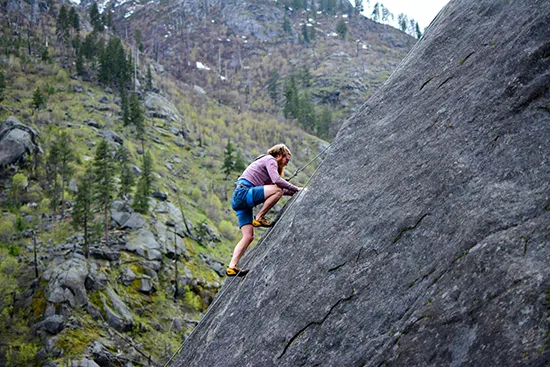
When practised safely, with the correct equipment and necessary expertise and experience, rock climbing is no more dangerous than many other sports. However, that does not mean there aren’t any risks. Nor does it exclude the possibility of mistakes or accidents. We can file most risks and dangers under one of the following categories.
• Immediate physical risks – Like any sportsperson, climbers risk injury. Climbing is physically strenuous and can result in injuries that range from small strains and sprains to more troublesome breaks and fractures, including some of the most common injuries seen in rock climbing. Collisions with the rock face can also cause cuts, bruising and concussions.
• Long-term injuries – Climbing involves many repetitive movements and, despite being a good all-body workout, relies more on certain muscle groups. This can result in longer-term problems, such as tendinitis and nerve damage, including conditions such as carpal tunnel syndrome.
• Environmental factors – Rock climbing often takes place in more extreme conditions and often, but not always, involves altitude and exposed environments. Cold temperatures can lead to hypothermia and other issues, while remote locations make rescue or extraction more difficult.
What happens financially if you’re injured climbing?
Even a relatively minor climbing injury can leave you unable to work for several weeks. For those who are self-employed, work in a physical role, or do not receive generous sick pay, this can quickly create financial pressure.
Mortgage payments, rent, household bills and family commitments do not stop just because you are recovering from an injury. This is where income protection can become one of the most important parts of a climbing insurance plan.
You can read more about the financial impact of a sports injury in the UK in our detailed guide, including how income protection can help bridge the gap during recovery.
From our experience, this is often one of the biggest concerns for climbers. It is not just about the injury itself, but how they manage financially while they are unable to work.
Who is rock climbing insurance for?
Ultimately, rock climbing insurance is for anyone who participates in this activity and desires peace of mind and financial protection when doing so. From first-timers to the most experienced athletes, climbers of all levels push themselves to learn new skills, advance to the next stage and climb higher and harder.
Risks exist at all levels of the sport, and mitigating these risks via specialist insurance is usually the financially responsible thing to do.
That said, insurance is strongly advisable and sometimes required in certain instances. For instance, rock climbing instructors or individuals leading group expeditions may need specialist insurance to do their job.
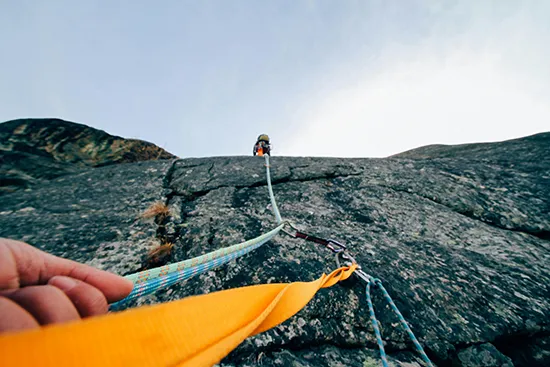
Likewise, competitive climbers or those who travel regularly to climb might be especially interested in insurance.
In the end, it all comes down to how much risk you are willing to shoulder. As your exposure to risk increases, the benefits of specialist rock insurance become more pronounced. We think it’s a good idea for all climbers to ask - if something were to happen, would I want financial protection? If the answer is yes, insurance is the way to achieve this.
When do you need rock climbing insurance?
Outdoor and multi-pitch climbers are typically at higher risk, not just due to the climb itself, but because of the location. Rescue costs and time off work are often underestimated.
Many climbers ask us whether we recommend specialist insurance for certain types of climbing. As noted above, all climbers benefit from the peace of mind and financial protection afforded by climbing insurance. But there are some instances and environments where we think you really should consider it.
Outdoor climbing
Insurance is an excellent idea if you do the majority of your climbing outside in a natural setting. The natural environment is unpredictable and difficult to manage. Even the most experienced climbers occasionally find themselves in a tricky situation and require assistance.
Climbing abroad
We always recommend climbers who regularly travel abroad take out an insurance policy with global coverage. As well as ensuring you receive the best possible treatment should anything happen when you are away, insurance can also help with the costs associated with repatriation.
Group climbing or competitions
Climbing in a group involves several unique risks, most notably that of legal liability should you cause injury to someone else. Specialist insurers can design policies to cover these eventualities and meet the specific needs of climbers who either compete or regularly climb in larger groups and official events.
Mountaineering
If you are heading to the mountains to get your climbing fix, you must prepare for the environment and the challenges it presents. As well as highly changeable weather, there is the terrain and altitude to compete with. Climbing in alpine conditions often involves more risks in the approach and return journey. A specialist insurance policy will cover many of these risks.
Multi-pitch activities
Multi-pitch activities involve routes that require more than one length of rope and often involve extended ascents. Due to their technical nature, they are more challenging and involve a higher degree of risk. Consequently, specialist insurance makes sense in these instances.
Instructing or guiding
All instructors and guides will be legally obliged to have some sort of insurance to protect themselves against legal claims in the event of an accident or injury. Different policies will cover you to different extents, so it pays to talk to a specialist insurer who understands the sport and the outdoor industry. They can help you create a bespoke policy that meets your precise needs.
Solo climbers
As you would expect, solo climbers put themselves at greater risk, as there is no one to help or assist in an emergency. As a result, injuries and accidents are more common, and insurance is a better idea.
High-risk climbing
You should consider insurance if you participate in high-risk climbing activities, such as free soloing. The risks and consequences are much graver, and insurance premiums will reflect this. But the protection insurance affords is certainly worthwhile in these cases.
Rock climbing clubs
Insurance is necessary if you run or operate a rock climbing club. It can protect you and other participants, as well as the club’s assets, facilities and equipment. In many cases, sports clubs operate on tight budgets and unexpected events, and financial losses can mark the end of the club. Insurance prevents that from happening.
Frequent climbers
Finally, if rock climbing plays a significant role in your life and you regularly head out to the crag a few times a week, insurance makes good financial sense. More frequent climbers are exposed to risk more regularly. As such, they are more likely to injure themselves or have an accident. Insurance provides that peace of mind and ensures you are financially protected.
What types of specialist rock climbing insurance are there?
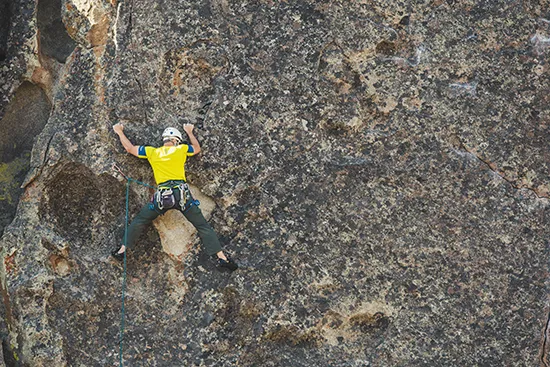
Specialist rock climbing policies often centre on three distinct areas, which you can combine and configure to create a policy that best suits you. These three areas are:
- Health insurance – Insurance that covers you in case of injury or health complications. It includes everything from impact injuries and fractures to dislocations and soft tissue damage. It enables you to skip long NHS waiting times and get scans and diagnoses at a time and place that suits you.
- Income protection – For many climbers, especially those who are self-employed, income protection is often the most important part of a policy, not the lump sum benefits. Insurance that ensures you can continue to pay the bills if you sustain a sports injury that prevents you from working. From your mortgage to your utility bills, there are some things you can’t afford to fall behind on.
- Life insurance – Insurance that pays out a lump sum should you sustain a sport-specific critical injury or illness. It ensures you don’t leave your loved ones with a financial burden they cannot afford.
Broker insight: how insurers assess climbing activities
When applying for rock climbing insurance, income protection or life insurance, insurers will usually want to understand exactly what type of climbing you take part in.
From our experience, key questions often include the maximum height you climb, whether you climb in the UK or abroad, and the type of environment involved. For example, climbing in the UK (for example, Scotland or Wales) may be viewed differently from climbing in higher mountain ranges overseas, such as the Alps or Pyrenees.
Insurers may also ask whether you take part in bouldering, traditional climbing, sport climbing, mountaineering, ice climbing, free climbing or solo climbing. They will usually want to know whether you climb with ropes, without ropes, alone, with others, or as part of an organised group or guided expedition. In some cases, they may also look at the level or grade of climbing you undertake, although this is typically used to understand overall risk rather than assess specific technical difficulty.
Indoor climbing and bouldering are often easier to place, but it is still important to disclose all activities accurately at the application stage. More technical or higher-risk climbing, particularly at height, abroad, without ropes or alone, can be harder to insure and may reduce the number of providers available.
Depending on the insurer, cover may be accepted on standard terms, offered with an exclusion, or, in some cases, rated with a higher premium. Life insurance may sometimes involve a loading, while income protection is more commonly either accepted, excluded or restricted depending on the activity.
This is why it is important to speak to a specialist broker. The right insurer will depend on the type of climbing you do, where you do it and how regularly you take part.
What do specialist rock climbing policies include?
Not all insurers are alike. Some offer a superior service than others. If you’re searching for a specialist rock climbing insurer, we recommend looking out for the following things:
- Communicative - A good insurer is open and communicative with existing and prospective policyholders. They won’t withhold information, and they will respond to communication in a timely and efficient manner.
- Knowledgeable - You want your insurer to understand the risks involved in rock climbing and have extensive experience with sports-related insurance. It enables them to create more comprehensive and competitively priced policies.
- Policies that reflect your needs - A high-quality insurer will propose a policy that reflects how you climb and the risks you are exposed to. They won’t make you pay for features and policy extras you don’t need.
- Streamlined claims process - Making a claim should be quick, easy and hassle-free. The process must be clear and easy to follow, and there shouldn’t be any nasty surprises or unreasonable demands.
- Competitive premiums - Look for competitive rates. There is no reason you should pay over the odds for your insurance. Price comparison services can help in this regard.
- A good reputation - Finally, look up reviews and feedback to get a better idea of how existing customers feel about your insurer.
Specialist rock climbing insurance with Quote Sports Insurance
At Quote Sports Insurance, we offer a professional and specialist rock climbing insurance service that enables you to find the right policy at the right price. As we are a sports-specific insurer, we understand the real-world risks involved in participating in physically demanding activities and have designed, developed and refined an insurance service that meets your needs.
From offering bespoke help and advice to helping you compare suitable options, we make finding affordable rock climbing insurance more straightforward.
If you’re unsure what type of cover would actually protect you properly based on how and where you climb, we can help.
Compare rock climbing insurance options or speak to a specialist today.
Frequently asked questions
Do I need insurance for indoor climbing?
In many cases, indoor climbing may be covered under standard policies, particularly in controlled environments such as climbing gyms. However, coverage will vary depending on the insurer, and some policies may still exclude certain types of climbing or limit benefits. It’s always worth checking the terms carefully to avoid any surprises at the point of claim.
Does income protection cover rock climbing?
Not all income protection policies automatically include rock climbing, especially outdoor or higher-risk activities. Some insurers may apply exclusions or require specialist underwriting. This is why many climbers look for policies designed with active or high-risk lifestyles in mind.
Is outdoor rock climbing excluded from standard insurance policies?
In many cases, yes. Outdoor rock climbing is often considered a higher-risk activity by insurers, particularly when ropes, height exposure or remote locations are involved. As a result, standard policies may exclude it altogether or restrict the level of cover available.
Can I get insurance for extreme climbing activities like free soloing?
Specialist insurance may be available for higher-risk climbing activities, but terms, conditions and premiums will vary significantly. Some extreme disciplines may be excluded entirely, while others may be covered with specific conditions in place. It’s important to speak to a specialist who understands the risks involved.